Living soil
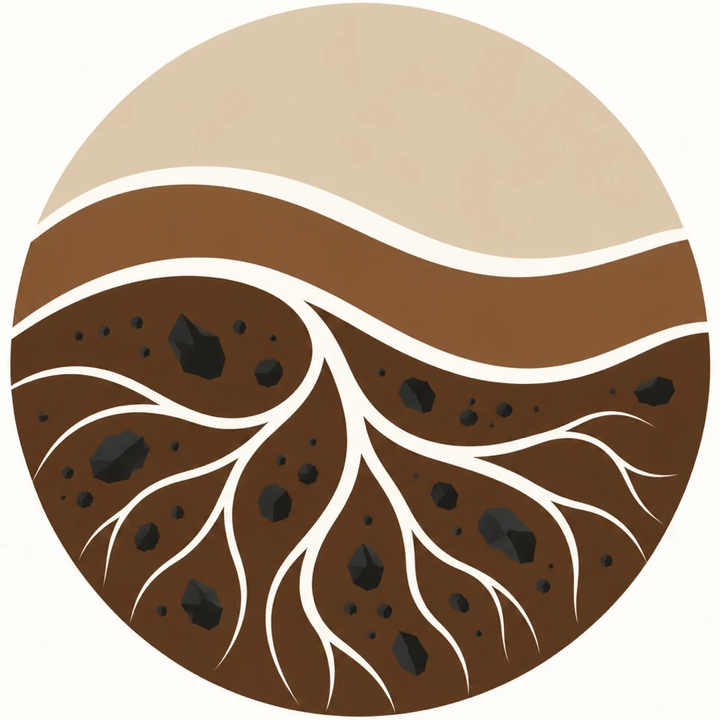
Layered from leaf litter to bedrock, with most roots and soil life in the dark topsoil. Every food forest, farm and patch of bush grows from it.
A not-for-profit for healthy soil, in the making
Every garden, farm and forest grows from soil, and healthy soil is alive. Loamistry helps bring tired, worn-out soil back to life with simple, natural methods like compost and biochar, a kind of charcoal made from wood and plant waste. We test what really works and share everything we learn for free, so anyone can grow healthier ground.
We test your soil, try a few natural treatments side by side, and show you clearly what made a difference.
Seeking a first siteHow to take a soil sample, and what the results actually mean for your garden or farm.
Free in the white paperWhat biochar is, how it helps soil hold water and nutrients for centuries, and how to make and use it safely.
Free in the white paperWe publish everything we find, including what didn't work, so you can decide what's right for your land.
Planned: Baseline Report, Vol. IThe name
Loamistry is a coined word for the art, science and philosophy of cultivating living soil. These are the roots we grew it from: our own associations, chosen with care, rather than a historical etymology.
The dark, crumbly mix of sand, silt, clay and humus that roots thrive in: the physical foundation of plant growth, and where every garden begins.
The old Great Work of slow refinement, made literal in soil: waste wood becomes biochar, fallen leaves become humus, and tired ground can come alive again.
Minerals, carbon, nutrients and the reactions between them. Measured, tested and written down, never assumed.
The countless organisms and relationships at work underground, most of them still unknown. Mystery invites inquiry; it's never a substitute for evidence.
Care and stewardship for the living world, and for the generations who will inherit the ground we leave them.
Beneath our feet
Within every handful of living soil, minerals, carbon, water, microorganisms and organic matter meet in countless relationships that sustain life on land.
Layered from leaf litter to bedrock, with most roots and soil life in the dark topsoil. Every food forest, farm and patch of bush grows from it.
Bacteria, fungi and worms eat what falls to the ground and breathe most of its carbon back to the air. That fast loop is what keeps soil alive.
Fungal threads feed on mulch and wood as they break them down, and weave through the soil between roots, crumbs and pieces of char.
Wood heated with little oxygen. Its porous carbon holds water and nutrients and houses microbes, and about 97% of it stays in soil for centuries.
Terra preta · "black earth"
Across the Amazon basin, where the natural soils are old and poor, there are patches of dark, fertile earth. People made them roughly 500 to 2,500 years ago from charcoal, ash, bone, food scraps, waste and broken pottery. The charcoal is what made it last.
Mulch feeds soil life and mostly returns to the air within years, so its store levels off. Biochar's keeps building, the slow build that made terra preta. Modelled with RothC and biochar's measured decay rates; the method is in chapter 4 of the white paper.
Our approach
Loamistry begins narrowly: one careful trial, honest records and open results, growing only as the evidence and the organisation can support it.
Research
Four treatments side by side in replicated, randomised plots, tested before treatment and at planned intervals such as six and twelve months. Proposed, with a soil scientist's input, at one consenting site to begin.
Biochar
Feedstock, method, temperature where it can be measured, lab quality, how it was charged and where it went. Biochar is one tool for soil, not a cure-all, and every batch is treated that way.
Open knowledge
What we learn, shared openly, failures included. Personal details, private property records and culturally restricted knowledge stay protected.
 Working paper No. 1
Regenerating Earth begins beneath our feet
The white paper
Our founding case, in six chapters that follow a soil profile from the leaf litter to bedrock: why soil, how living soil works, the carbon that leaves and the carbon that stays, terra preta, the work we propose, and the principles beneath it all.
Get involved
Loamistry is at seed stage: not yet incorporated or registered, and not asking anyone for money. What helps now is people.
If you steward land and would like baseline soil tests and a measured trial, tell us. Nothing starts without clear agreement on consent, data and access.
Soil scientists, agronomists and researchers: a qualified eye on the trial design is what makes it credible. We'd value your challenge as much as your help.
Gardeners, growers and students: workshops and field days come later. For now, say hello and tell us what you'd most like to learn about soil.
Loamistry doesn't have its own inbox yet, so messages go to Food Forest Journey for now.